
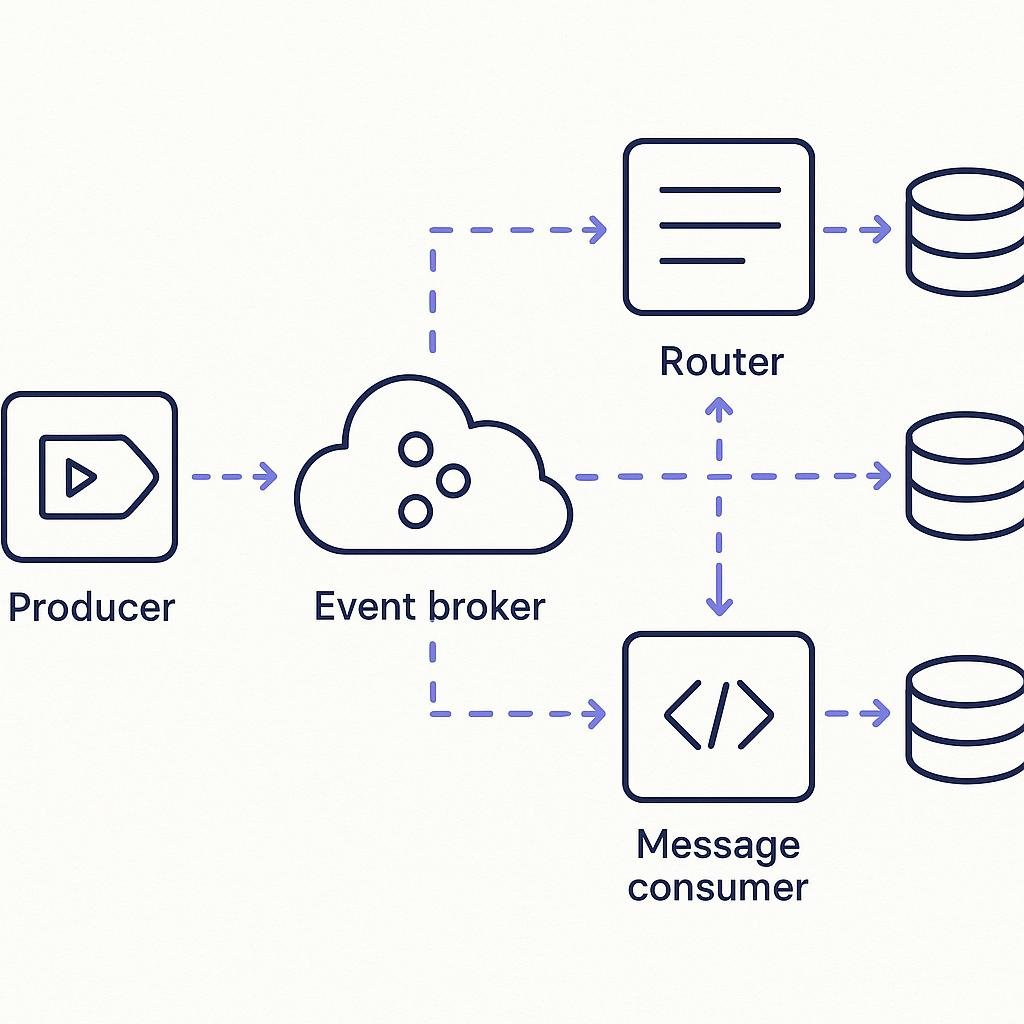
Imagine an orchestra where each musician plays their part in perfect harmony, responding to the cues of the conductor. Now, picture a software system that works with the same fluidity, where each component reacts to events as they occur. This is the essence of event-driven architecture (EDA).
What Is Event-Driven Architecture?
Event-Driven Architecture (EDA) is a design paradigm where the flow of the program is determined by events such as user actions, sensor outputs, or messages from other programs. An event can be anything significant that happens within a system. In EDA, components of the system communicate with each other through events. When an event occurs, it triggers various actions or responses from the system components.
At its core, EDA is about decoupling the components of a system to allow for greater scalability and flexibility. This architecture is particularly well-suited to environments where systems need to operate in real-time or near real-time, as it allows for asynchronous communication between the components.
How It Works
The fundamental building blocks of an event-driven architecture include:
- Event Producers: These are the sources or emitters of events. They can be anything from a user interface that triggers an event when a button is clicked, to a backend service that emits an event when data changes.
- Event Consumers: These components listen for and process events. Consumers react to events by executing specific business logic.
- Event Channels: These are the pathways through which events travel from producers to consumers. They can be implemented using message brokers like Kafka, RabbitMQ, or cloud-based services like AWS SNS/SQS.
- Event Processors: These can be part of the consumer or a separate component that processes the event data, often applying business rules or triggering further actions.
In an EDA system, when an event occurs, the event producer emits the event to an event channel. The event channel then ensures the event is delivered to one or more event consumers. The consumers process the event and may trigger further events, creating a dynamic and responsive system.
Step-by-Step Guide to Implementing EDA
Transitioning to an event-driven architecture can seem daunting, but breaking it down into a series of steps can make the process manageable. Here’s a practical guide to implementing EDA:
- Identify Events: Begin by identifying the key events within your system. These are the occurrences that should trigger changes or actions within the system. Examples might include user login, data update, or new message received.
- Define Event Producers and Consumers: Determine which components of your system will produce events and which will consume them. This step involves understanding the interactions between different parts of your system.
- Select an Event Channel: Choose an appropriate technology for your event channel. Consider factors like message volume, latency requirements, and scalability. Popular choices include Apache Kafka for high-throughput needs or AWS SNS/SQS for cloud-based solutions.
- Design Event Payloads: Define the data structure for your events. An event payload should contain all the information necessary for consumers to process the event without needing additional context.
- Implement Event Handlers: Develop the logic for your event consumers. This involves writing code that listens for specific events and performs the necessary business logic upon receiving an event.
- Test the System: Conduct thorough testing to ensure that events are being produced, transmitted, and consumed as expected. Testing should include scenarios for both normal operation and edge cases.
Common Mistakes to Avoid
While event-driven architecture offers numerous benefits, there are common pitfalls that teams should be aware of:
- Overcomplicating Event Design: It’s easy to get carried away with the number of events in your system. Keep event design simple and focused on significant state changes.
- Ignoring Idempotency: Consumers should be designed to handle events idempotently, meaning processing an event multiple times should have the same effect as processing it once. This prevents issues if an event is accidentally re-delivered.
- Underestimating Monitoring Needs: Monitoring an event-driven system can be more complex than a traditional system. Ensure you have robust monitoring in place to track event flow and detect issues early.
- Lack of Documentation: Asynchronous systems can become difficult to understand without proper documentation. Keep a clear record of event types, producers, and consumers.
Real-World Examples
Event-driven architecture is widely used across various industries to build scalable and responsive systems. Here are a few real-world examples:
- eCommerce Platforms: In eCommerce systems, events such as order placements, payment confirmations, and inventory updates are critical. An EDA allows these systems to process orders in real-time, send notifications, and update inventory without delay.
- Financial Services: Banks and financial institutions use EDA to handle transactions, fraud detection, and account updates. This architecture supports high-volume transaction processing and real-time monitoring for fraudulent activity.
- IoT Systems: In IoT ecosystems, devices generate a constant stream of events. An event-driven approach enables efficient processing of these events, allowing for real-time analysis and response.
- Social Media Platforms: Social networks rely on EDA to manage user interactions, such as likes, comments, and shares, ensuring that updates are quickly propagated to followers.
Final Thoughts
Event-driven architecture offers a compelling approach to building modern software systems that are scalable, responsive, and flexible. By focusing on events as the core unit of work, teams can develop systems that are better equipped to handle the dynamic and asynchronous nature of today’s digital world. However, like any architectural choice, it requires careful planning and execution to avoid common pitfalls. By understanding the fundamentals of EDA and learning from real-world implementations, you can leverage this architecture to create systems that delight users with their speed and responsiveness.