
Imagine living in a world where your smartphone couldn’t understand your voice commands, or where medical imaging was nothing more than a blur of indistinguishable shapes. Welcome to the realm of signal processing, the unsung hero behind many of the technologies we rely on every day. But what exactly is signal processing, and why is it so crucial in engineering and performance? Let’s dive in and explore.
What Is Signal Processing?
Signal processing is the science of analyzing, modifying, and synthesizing signals such as sound, images, and scientific measurements. It involves the transformation or manipulation of information signals to improve their quality or to extract valuable information. This process is fundamental in converting raw data into a more useful form, enabling technology to understand and respond to the world around us.
Think of signal processing as the translator that allows your digital devices to interpret the analog world. Whether it’s converting the fluctuating voltages of your voice into digital data that your phone can understand or enhancing a grainy medical scan to reveal critical details, signal processing is at the heart of these transformations.
How It Works
Signal processing can be broadly classified into analog and digital signal processing. Each approach has its own methods and applications, but the ultimate goal is the same: refining signals for better application and communication.
- Analog Signal Processing (ASP): This involves the manipulation of continuous signals. It’s used in traditional radio broadcasting, audio processing, and some older telephone systems. Techniques include filtering, modulation, and amplification.
- Digital Signal Processing (DSP): This takes discrete signals (digital) and manipulates them. It’s heavily used in modern technology, from smartphones and digital cameras to advanced medical equipment. DSP techniques include Fast Fourier Transform (FFT), digital filtering, and image processing.
Step-by-Step Guide
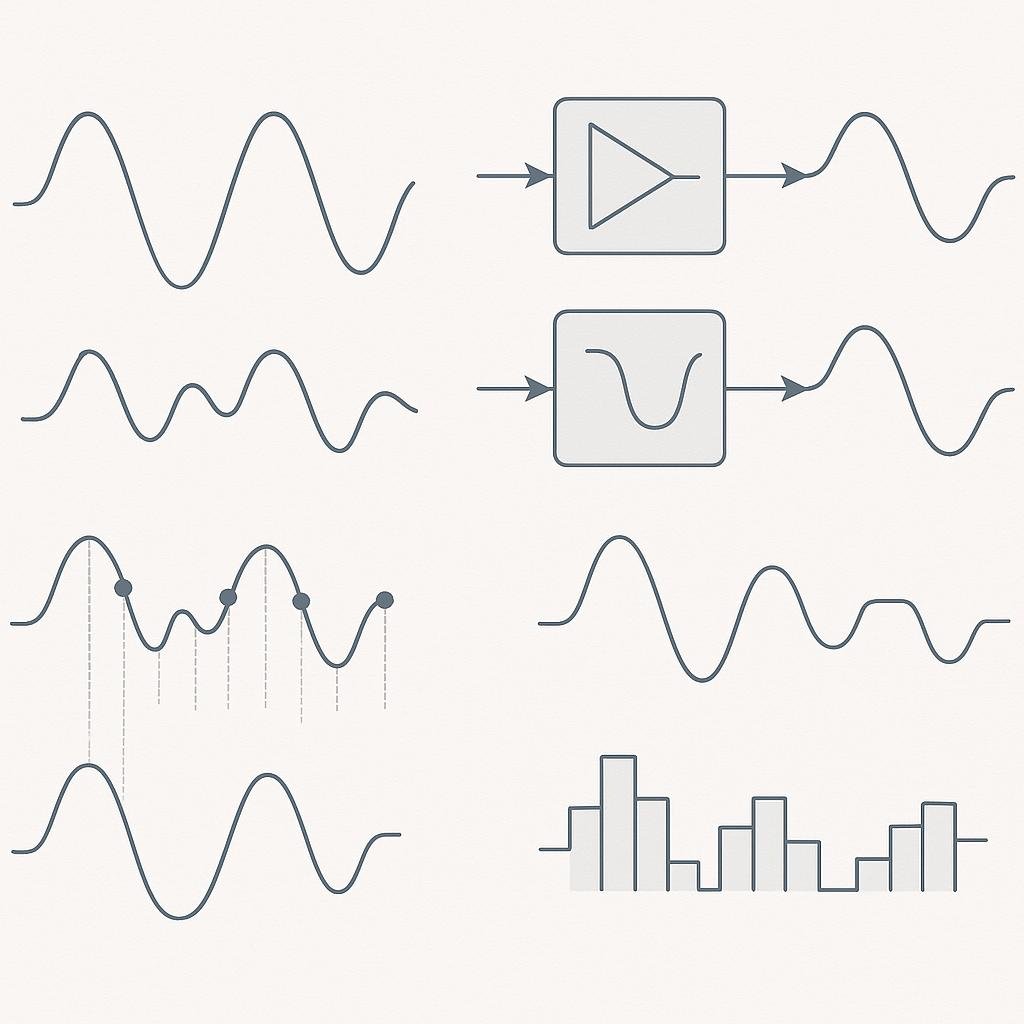
To better grasp how signal processing works, let’s break down the steps involved in a typical digital signal processing task, such as enhancing audio quality in a recording.
- Step 1: Signal Acquisition – The first step involves capturing the signal using sensors. For audio, this might mean using a microphone to capture sound waves.
- Step 2: Analog-to-Digital Conversion – Since digital devices work with digital signals, the captured analog signal must be converted into a digital form using an Analog-to-Digital Converter (ADC).
- Step 3: Signal Processing – This is where the magic happens. Techniques such as filtering out noise, adjusting volume levels, and enhancing certain frequencies are applied to improve the audio quality.
- Step 4: Digital-to-Analog Conversion – Once processed, the digital signal may need to be converted back to an analog form using a Digital-to-Analog Converter (DAC) for playback through speakers.
- Step 5: Output – The final step is the output, where the enhanced audio is played back, providing a clearer and more enjoyable listening experience.
Common Mistakes to Avoid
While signal processing is a powerful tool, there are common pitfalls that can hinder its effectiveness. Here are some mistakes to watch out for:
- Over-filtering: Applying too many filters can remove not only noise but also essential parts of the signal, degrading quality.
- Ignoring Sampling Rates: Choosing an inappropriate sampling rate can lead to aliasing or loss of critical information in the signal.
- Neglecting Real-Time Requirements: In applications like live streaming or telecommunication, failing to process signals in real-time can result in delays and poor performance.
- Lack of Understanding of the Signal: Without a thorough understanding of the signal characteristics, it’s easy to apply incorrect processing techniques, leading to suboptimal results.
Real-World Examples
Signal processing might sound abstract, but it has practical applications that touch our lives daily. Here are a few examples:
- Mobile Communication: Every time you make a call or send a text, signal processing is at work to ensure clear and effective communication.
- Audio and Music Production: From noise reduction in recordings to the creation of complex sound effects, signal processing is essential in the music industry.
- Medical Imaging: Techniques such as MRI and CT scans rely on signal processing to generate clear images from raw data, aiding in accurate diagnosis.
- Seismic Data Analysis: In geology, signal processing helps in analyzing data from sensors to predict earthquakes and explore natural resources.
Final Thoughts
Signal processing is a cornerstone of modern technology, playing a critical role in enabling devices to work smarter and more efficiently. By understanding how it operates, the methods involved, and the potential pitfalls, we can better appreciate the technology that connects and enriches our lives. Whether you’re an aspiring engineer or simply a tech enthusiast, diving into the world of signal processing opens up a realm of possibilities and innovations.