Systems Engineering

Decentralized Autonomous Systems: Innovations in Multi-agent Coordination for Resilient Infrastructure Networks

Introduction: The evolution of systemic complexity in infrastructure networks has emphasized the need for robust, scalable, and adaptive design frameworks. Decentralized Autonomous Systems (DAS) offer pioneering pathways to enhance multi-agent coordination, bolster resilience, and facilitate self-sustaining operability within critical infrastructure such as electrical grids, transportation systems, and water distribution networks. This research delves into the […]

The Lab

Quantum-Enhanced Neuromorphic Computing: Bridging Quantum Mechanics with Cognitive Architectures

Introduction: Quantum-enhanced neuromorphic computing (QENC) represents a burgeoning frontier at the confluence of quantum mechanics and cognitive computational architectures. As traditional semiconductor technologies approach their physical limits, the integration of quantum phenomena into neuromorphic systems offers a novel paradigm shift. This intersection encourages the exploration of leveraging quantum coherence, entanglement, and superposition to simulate cognitive

Academic Resources

Advanced Quantum Entanglement for Enhanced Quantum Computing Architectures

Introduction: The relentless pursuit of advanced computational capabilities has driven the exploration of quantum computing, a field that leverages the principles of quantum mechanics to process information in a fundamentally new paradigmatic manner. Central to this exploration is quantum entanglement, a phenomenon where quantum states of particles become interdependent, regardless of distance. Quantum entanglement bears

Algo-Trading

Decentralized Adaptive Algorithms in High-Frequency Trading: Leveraging Blockchain for Enhanced Transparency and Efficiency

Introduction: The advent of high-frequency trading (HFT) has catalyzed significant advancements in financial markets, allowing for rapid execution of trades and facilitating liquidity. However, the inherent opacity and centralization in traditional HFT systems pose substantial challenges in terms of transparency and systemic risks. This research investigates the integration of decentralized adaptive algorithms—facilitated through blockchain technology—in

Engineering & Performance

Optimization of Thermoelastic Damping in Micro-Electromechanical Systems for Enhanced Performance

### Introduction Micro-Electromechanical Systems (MEMS) are miniature devices that integrate electrical and mechanical components at the microscale. These systems are instrumental in a myriad of applications including sensors, actuators, and resonators. A prevalent challenge in MEMS design is thermoelastic damping (TED), an intrinsic energy loss mechanism where thermal conduction results in reduced mechanical energy. This

Systems Engineering

Synergetic Feedback Loops in Cyber-Physical Systems: Bridging Control Theory and Machine Learning

In the realm of systems engineering, the integration of cyber-physical systems (CPS) marks a significant leap in how physical processes and computational resources interact fluidly. These systems are increasingly being employed in critical domains such as autonomous vehicles, smart grids, and healthcare, necessitating a robust framework that seamlessly blends various scientific disciplines. The emergence of

The Lab

Quantum-enhanced Material Synthesis for Next-Generation Wearable Technologies

In the rapidly evolving field of wearable technology, there is a persistent demand for more efficient, flexible, and durable materials that can seamlessly integrate into everyday clothing. The need for such materials has spurred research into quantum-enhanced synthesis techniques which promise to tailor the atomic structure of materials with unprecedented precision. This innovation is aimed

Academic Resources

Revolutionizing Academic Publishing: Integrating AI with Blockchain for Enhanced Research Trust and Accessibility

Academic publishing is undergoing a dynamic transformation at the intersection of artificial intelligence and blockchain technology. This evolution aims to enhance the transparency, accessibility, and trustworthiness of scholarly research. The traditional model of academic publication is often critiqued for its high costs, limited access, and lengthy peer-review processes. As a result, there’s a growing demand

Algo-Trading

Adaptive Quantum Reinforcement Learning for Volatility Forecasting in Algorithmic Trading

Algorithmic trading has continually evolved, incorporating the latest technological advancements to maintain a competitive edge. One of the most promising approaches is integrating quantum computing with machine learning techniques to enhance the efficacy of predictive models. The introduction of Adaptive Quantum Reinforcement Learning (AqRL) offers a novel framework for improving volatility forecasting in financial markets.

Engineering & Performance

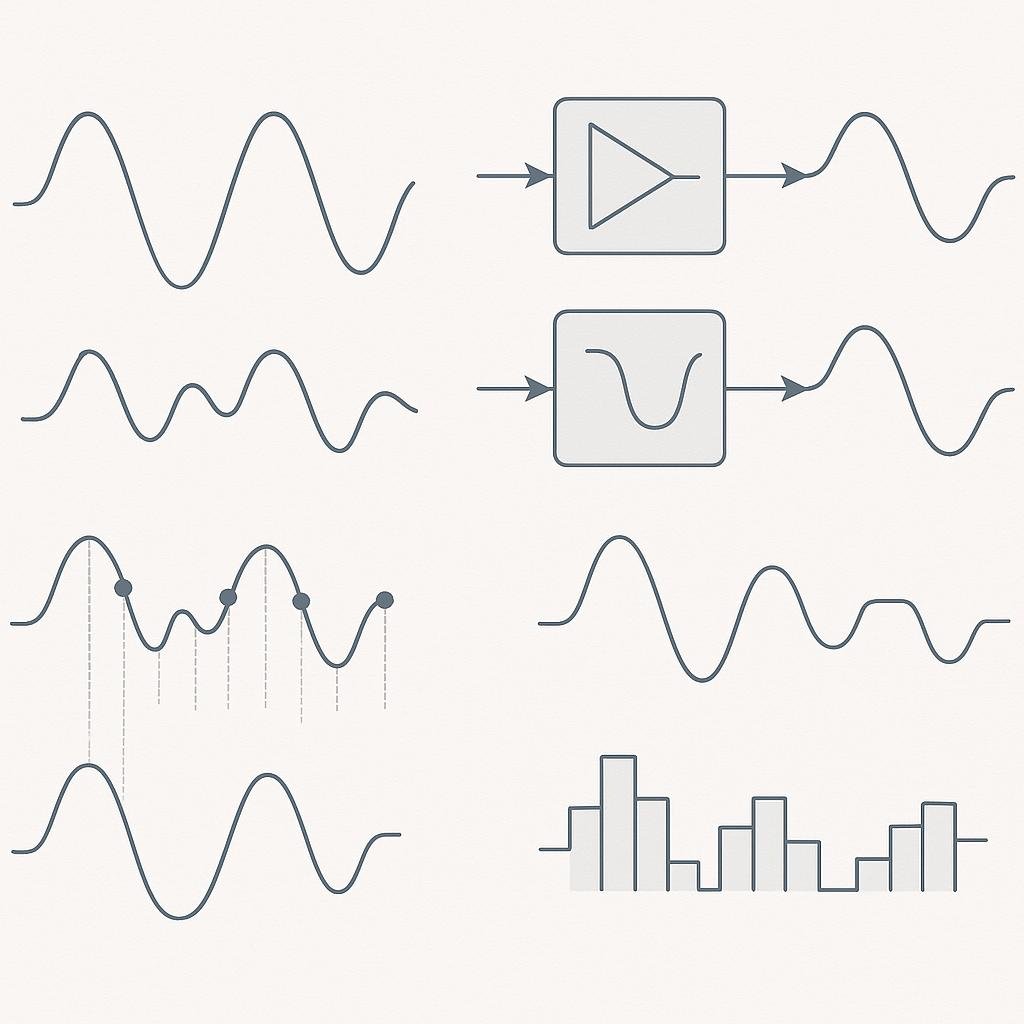
Advanced Vibrational Dampening via Metamaterial Design: The Future of Structural Engineering Optimization

In recent years, the engineering industry has observed a significant shift towards utilizing advanced materials to address the longstanding issue of vibrational interference in structural applications. Metamaterials, artificially engineered structures with properties not found in naturally occurring substances, have emerged as frontrunners in optimizing material behavior under dynamic loads. By altering the microstructural geometry and

Scroll to Top