
Abstract
In the burgeoning field of nano-engineered materials, optimizing the thermal management systems of advanced industrial applications remains a critical challenge. The integration of nanomaterials into heat exchanger designs promises to revolutionize performance by enhancing thermodynamic efficiency. This research explores the synthesis and application of novel nanoparticle-infused nanocomposites to significantly improve heat transfer rates. We investigate their impact on reducing thermal resistance and maximizing energy efficiency, paving the way for breakthroughs in both large-scale industrial and microelectronic cooling systems.
Technical Methodology
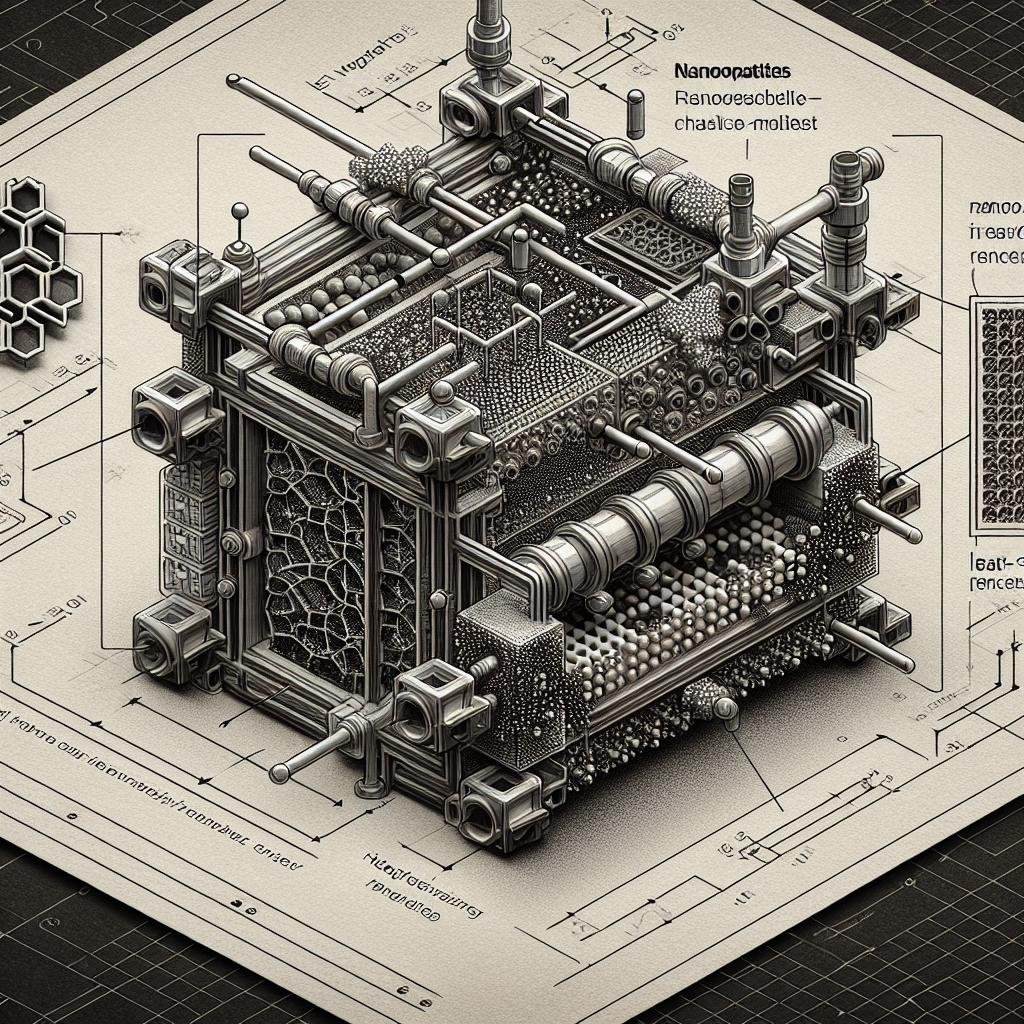
The methodology employed involves the development of nanocomposite materials tailored specifically for use in advanced heat exchangers. These nanocomposites are synthesized through a sol-gel process that allows for precise control over the dispersion and concentration of nanoparticles within the matrix. Crucially, these nanoparticles, often metals like silver or copper, are selected for their thermal conductivity properties, which enhance the overall heat transfer capabilities of the composite material.
Subsequently, these materials are integrated into heat exchanger prototypes, employing cutting-edge 3D printing technologies to fabricate components with intricate geometries that traditional manufacturing methods cannot achieve. These geometries are optimized using computational fluid dynamics simulations to assess and improve the thermal performance under various operational conditions. The experimental validation involves a series of controlled thermal tests using sophisticated measurement apparatus to evaluate parameters such as thermal resistance, heat transfer coefficients, and efficiency ratios.
Future Trajectory
Looking forward, the advancement of nano-engineered materials in thermal management continues to hold significant promise. Future research will focus on the scalability of these nanocomposite materials to larger industrial applications beyond laboratory settings. The robustness of the materials under varying environmental conditions and long-term operational cycles will be thoroughly investigated. Furthermore, the potential of self-healing nanocomposite structures, which could autonomously repair microscopic defects and thus extend the lifespan of the heat exchangers, is a tantalizing prospect for future studies.
The marriage of artificial intelligence with material science is anticipated to foster major advancements. Machine learning algorithms can optimize the selection and configuration of nanoparticles to tailor material properties for specific applications dynamically. Such advances could ultimately democratize access to high-efficiency thermal management systems across industries, including energy, aerospace, and electronics.