
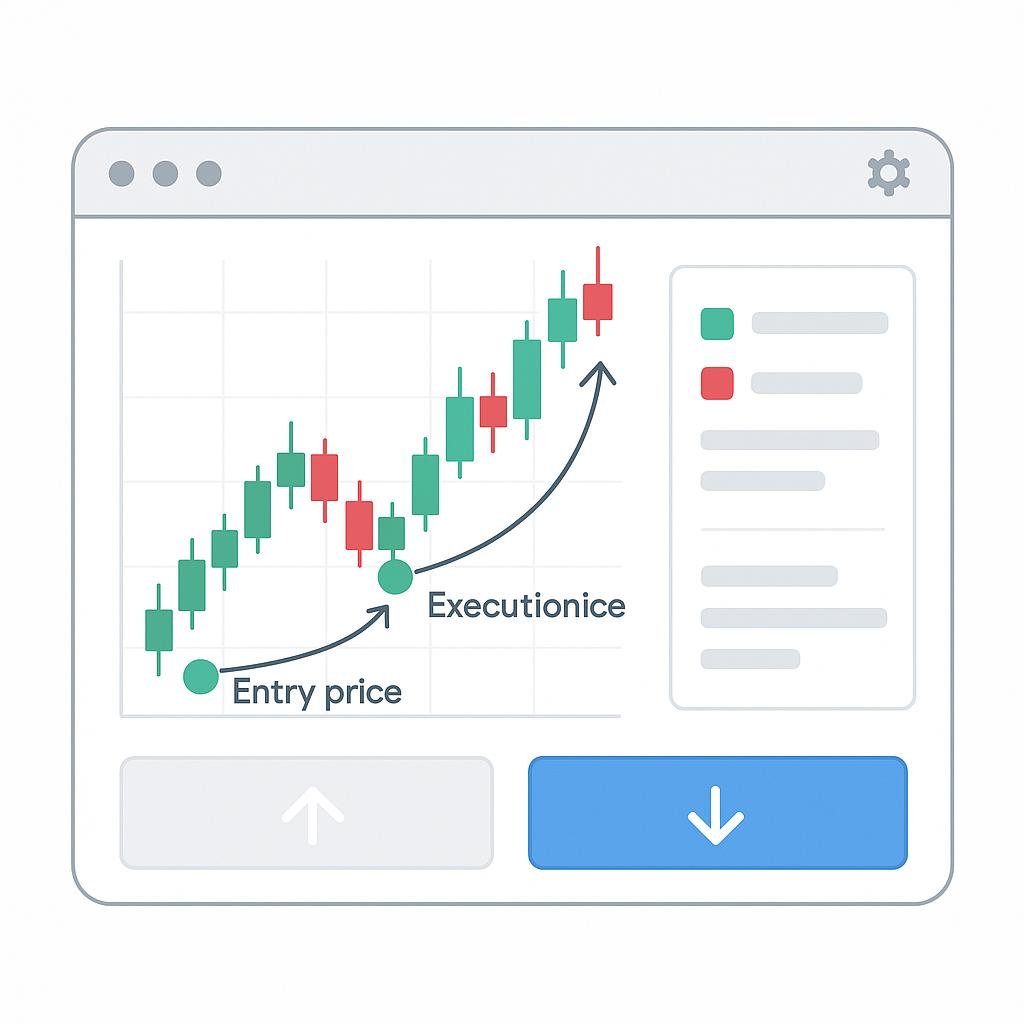
Ever placed a trade and noticed that the execution price was slightly different from what you anticipated? Welcome to the world of slippage in trading, where the price you expect is not always the price you get. Understanding slippage is crucial for traders looking to optimize their strategies and minimize unexpected costs.
What Is Slippage in Trading?
Slippage occurs when there is a difference between the expected price of a trade and the price it is actually executed at. This phenomenon is prevalent in volatile markets, where price changes can happen in the blink of an eye. Slippage can occur in all types of trading, including forex, stocks, and futures.
It’s essential to recognize that slippage can be both positive and negative. Positive slippage means you get a better price than expected, while negative slippage results in a worse price. While traders often focus on minimizing negative slippage, understanding both types is vital for a comprehensive trading strategy.
How It Works
To better grasp how slippage works, consider the following scenario: You place a market order to buy 100 shares of a stock at $50. However, the price moves up to $50.10 by the time your order is executed. This 10-cent difference per share is slippage.
- Volatility: High volatility increases the likelihood of slippage as prices can change rapidly.
- Order Type: Market orders are more susceptible to slippage because they are executed at the best available price, not a specified price.
- Liquidity: In markets with low liquidity, fewer participants are available to take the other side of your trade, leading to greater slippage.
Step-by-Step Guide to Minimize Slippage
Minimizing slippage requires a proactive approach. Here are some steps you can follow:
1. Use Limit Orders
Unlike market orders, limit orders allow you to specify the exact price at which you want to buy or sell. This control helps you avoid negative slippage by ensuring your trade is only executed at your desired price. However, the downside is that your order might not be filled if the price does not reach your set level.
2. Trade During High Liquidity Periods
Markets have specific hours when trading volume is at its peak, such as the overlap between major stock exchanges. Trading during these times can significantly reduce slippage due to higher liquidity and more market participants.
3. Monitor Market Conditions
Keeping an eye on the market’s volatility can help you anticipate potential slippage. Tools like the Average True Range (ATR) can provide insights into market volatility, helping you adjust your strategy accordingly.
4. Implement Algorithmic Trading
Algorithmic trading strategies can automatically execute orders based on pre-set criteria, allowing for precise entry and exit points. These systems can be designed to react to market conditions swiftly, minimizing the impact of slippage.
Common Mistakes to Avoid
Avoiding slippage involves recognizing and steering clear of common pitfalls:
- Ignoring Market News: Major news events can cause sudden price movements, leading to increased slippage. Stay informed about economic releases and significant announcements.
- Overlooking Order Types: Using the wrong order type for your strategy can result in unnecessary slippage. Understand the distinctions between market, limit, and stop orders.
- Failing to Use Stop-Loss Orders: Stop-loss orders can help limit losses due to slippage by automatically closing a position once it reaches a certain level.
Real-World Examples
Let’s look at some real-world scenarios where slippage plays a critical role:
Example 1: Forex Trading
In the forex market, slippage is common during periods of high volatility, such as around major economic announcements. For instance, a trader might place a buy order for EUR/USD at 1.1500, but due to a sudden spike in volatility, the order is executed at 1.1520, incurring negative slippage.
Example 2: Stock Market
Suppose an investor places a market order to buy 500 shares of a rapidly rising tech stock. The stock’s price jumps from $100 to $101 during the order execution, resulting in a $500 cost due to slippage (500 shares x $1 slippage per share).
Example 3: Cryptocurrency Trading
In the fast-paced world of cryptocurrency trading, slippage is a frequent issue due to extreme price volatility. A trader might attempt to sell a position in Bitcoin at $40,000, but by the time the order is executed, the price has dropped to $39,800, leading to negative slippage.
Final Thoughts
Slippage is an inevitable part of trading, especially in markets characterized by high volatility and low liquidity. However, by understanding what slippage is and implementing strategies to minimize its impact, traders can protect their capital and improve their overall trading performance. Using limit orders, trading during peak liquidity periods, and leveraging algorithmic trading are effective ways to mitigate slippage. Moreover, being aware of common mistakes and learning from real-world examples can further enhance your trading strategy. Remember, while you may not be able to eliminate slippage entirely, the right approach can significantly reduce its costs and help you make more informed trading decisions.