
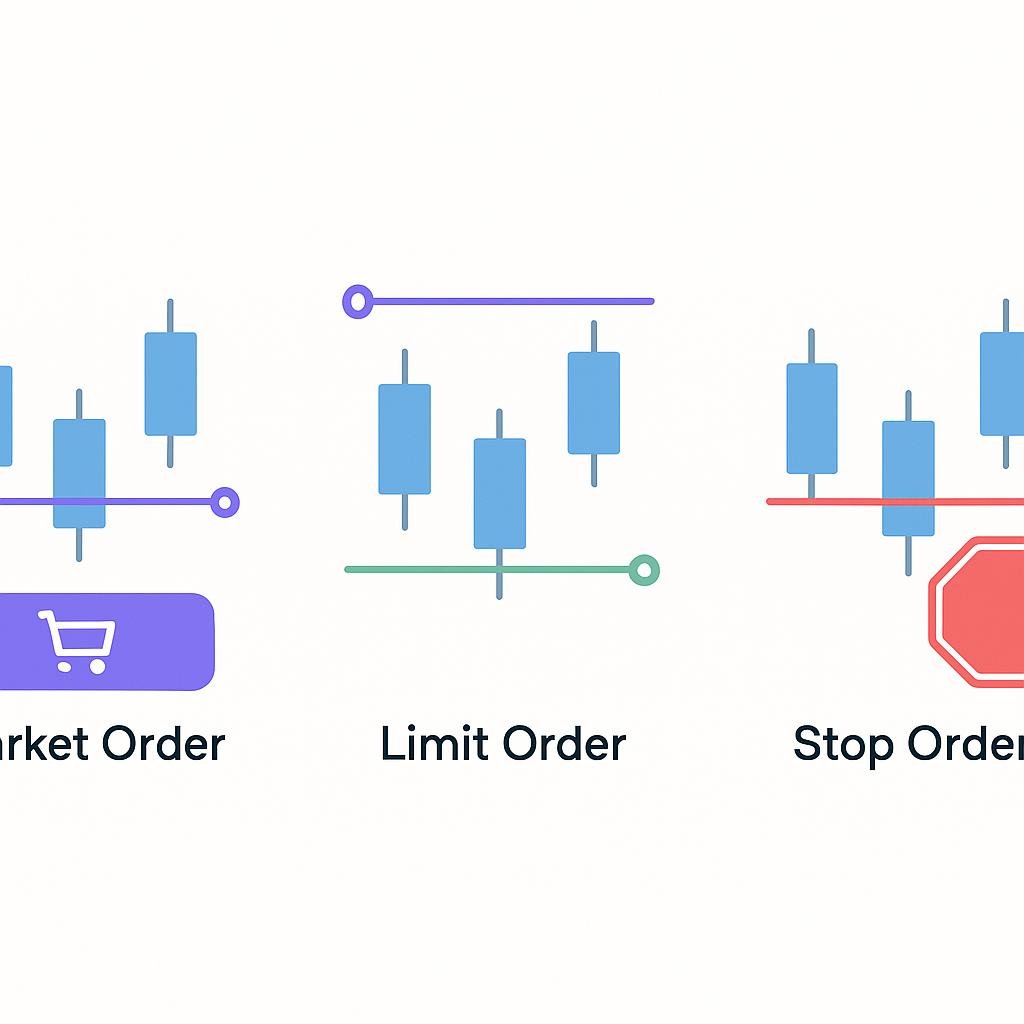
Understanding the different types of orders in the stock market can feel like learning a new language. But once you grasp the basics of market, limit, stop orders, and more, you’ll feel empowered to trade with confidence and precision.
What Is an Order in Trading?
In the world of trading, an order is an instruction that you, as an investor, give to your broker to buy or sell a security. These orders are the primary mechanism through which you execute your trading strategy, and they come in various forms to suit different market conditions and objectives. Understanding these order types is crucial for effective trading, whether you’re an algorithmic trader or a traditional investor.
Market Orders
A market order is the most straightforward type of order. When you place a market order, you’re instructing your broker to buy or sell a security immediately at the best available current price. This type of order prioritizes speed over price, ensuring that the trade is executed as quickly as possible.
Market orders are ideal when you need to enter or exit a position quickly, and you’re less concerned about the exact price at which the trade occurs. However, this can be risky in very volatile markets where prices can change rapidly.
Example of a Market Order
Imagine you’re monitoring the stock of a company, and you’ve decided it’s the right time to buy. You place a market order to purchase 100 shares. Your broker will execute this order at the current best price, which might slightly differ from the price you saw a moment ago due to market fluctuations.
Limit Orders
Limit orders provide more control over the price at which your trade is executed. When you place a limit order, you set a specific price at which you want to buy or sell a security. The order will only be executed if the market reaches that price or better.
This type of order is beneficial when you want to ensure you’re buying or selling at a particular price and are willing to wait until the market reaches that point. However, there is a risk that your order might not be executed if the market doesn’t reach your specified price.
Example of a Limit Order
Suppose you want to buy shares of a company, but you’re only willing to pay $50 per share. You place a limit order with this price. If the stock price falls to $50 or lower, your order will be executed. If it remains above $50, your order will stay pending.
Stop Orders
Stop orders, sometimes referred to as stop-loss orders, are designed to limit an investor’s loss or to lock in a profit. A stop order becomes a market order once the stop price is reached. This means the order will be executed at the best available price after the stop price is hit.
Stop orders are often used to protect gains or prevent further losses by setting an exit point for a trade.
Example of a Stop Order
Assume you own a stock currently priced at $100. To protect your investment, you set a stop order at $95. If the stock price falls to $95, your stop order converts into a market order, and your shares are sold at the best available price, minimizing your losses.
How It Works
Understanding how these orders work in practice can significantly enhance your trading strategy. Here’s a brief overview of how each order type operates:
- Market Orders: Executed immediately at the current market price. Best for quick trades but can result in unfavorable pricing in a volatile market.
- Limit Orders: Executed only at your specified price or better. Useful for controlling the price of your trades but may result in unfulfilled orders if the price isn’t met.
- Stop Orders: Triggered when a security hits a certain price, converting into a market order. Effective for managing risk but can lead to execution at prices worse than expected during rapid market movements.
Step-by-Step Guide to Placing Orders
Here’s a practical guide to placing these different types of orders:
- Placing a Market Order: Log into your trading platform, select the security you’d like to trade, choose ‘Market Order’ from the order type options, and specify the quantity. Confirm and submit your order.
- Placing a Limit Order: Choose the security, select ‘Limit Order,’ enter your desired price, and specify the quantity. Double-check your details before confirming and submitting your order.
- Placing a Stop Order: Access the security, select ‘Stop Order,’ set your stop price, and enter the quantity. Review your input and submit the order.
Common Mistakes to Avoid
Even seasoned traders can make errors when placing orders. Here are some common pitfalls to watch out for:
- Ignoring Market Volatility: Volatile markets can cause market orders to execute at prices significantly different from expected. Consider using limit orders in such situations.
- Setting Inappropriate Limit Prices: Setting a limit price too far from the current market price may result in your order not being executed.
- Misplacing Stop Orders: Setting stop orders too close to the current price can result in premature execution. Give yourself enough room to handle normal market fluctuations.
- Forgetting to Monitor Orders: After placing orders, especially limit or stop orders, keep an eye on them to ensure they execute as planned.
Real-World Examples
Let’s explore some real-world scenarios to illustrate how these order types function in practice:
Scenario 1: Buying a Stock with a Market Order
Jane wants to buy shares of XYZ Corp quickly to capitalize on a positive earnings report. She places a market order for 500 shares. The order executes immediately, though the price per share is slightly higher than anticipated due to market demand.
Scenario 2: Selling with a Limit Order
Mike owns shares of ABC Inc., currently trading at $75. He sets a limit order to sell at $80 per share. The market gradually rises, and when the price hits $80, his order is executed, securing a profit.
Scenario 3: Protecting Gains with a Stop Order
Susan has seen her investment in DEF Ltd. grow significantly. To protect her profits, she places a stop order at $90. The stock price begins to decline, and when it hits $90, her shares are sold, preserving her gains.
Final Thoughts
Understanding and utilizing different order types effectively can greatly enhance your trading strategy. Whether you’re executing a quick market order or setting a deliberate limit order, each type serves a unique purpose and suits different market conditions. By being aware of the benefits and potential pitfalls of each order type, you can optimize your trades and better manage your investments. Remember, the key is to align your choice of order type with your specific trading goals and the market environment.