
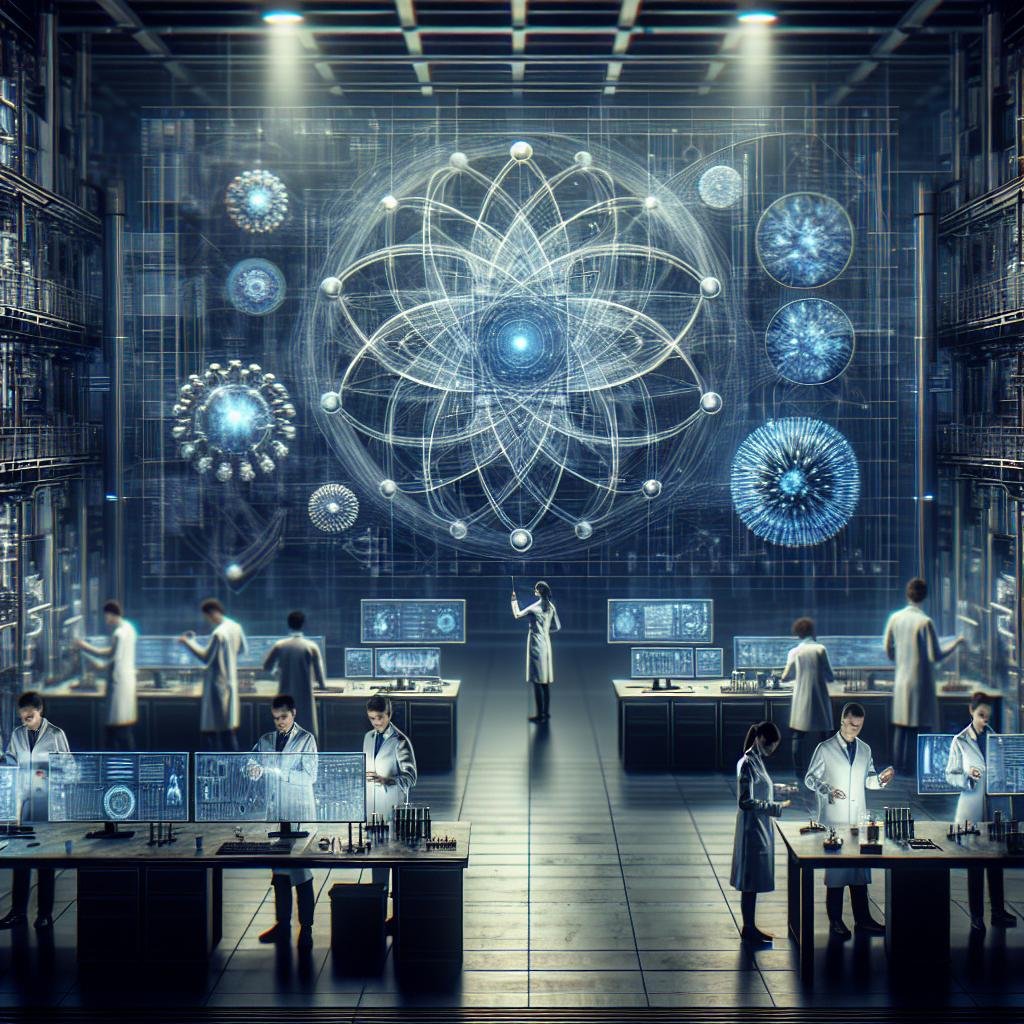
Introduction: Quantum-enhanced neuromorphic computing (QENC) represents a burgeoning frontier at the confluence of quantum mechanics and cognitive computational architectures. As traditional semiconductor technologies approach their physical limits, the integration of quantum phenomena into neuromorphic systems offers a novel paradigm shift. This intersection encourages the exploration of leveraging quantum coherence, entanglement, and superposition to simulate cognitive processes with unprecedented efficiency and accuracy, fostering meaningful advancements in artificial intelligence and machine learning.
Technical Analysis: At the heart of QENC is the leveraging of qubits to emulate neuron-like structures with quantum-driven synapses, which promote enhanced parallel processing capabilities. By integrating NISQ (Noisy Intermediate-Scale Quantum) technology into neuromorphic designs, we transcend the computational limits imposed by classical architecture. This synergy facilitates higher-order logical operations with reduced energy consumption. Moreover, the implementation of quantum neural networks capitalizes on the vast configuration space of quantum states, enabling the rapid convergence of learning algorithms. The theoretical framework aligns with the principles of quantum Hamiltonian dynamics to model excitation transport in networks reminiscent of biological neocortices.
Future Implications: The practical realization of QENC could herald a renaissance in computational neuroscience and AI, driving significant advancements in tasks requiring cognitive flexibility and pattern recognition. We anticipate the emergence of quantum-assisted intelligent systems that excel in domain-specific applications such as pharmaceutical drug discovery, cryptography, and real-time data analysis in complex systems. As quantum hardware matures, scalable implementations will increasingly become viable, catalyzing a transformation in how we engineer and understand cognition in artificial systems. To fully harness the potential of this integration, future research must focus on optimizing quantum-classical interfaces and addressing intrinsic decoherence challenges.